Cycling Achilles pain is often a sign that ankle loading is not being managed well by the setup. It is easy to reduce the issue to one local tendon, but in practice the Achilles reacts to how the whole lower chain is working: foot support, cleat position, saddle height and the way you are pushing through the pedal.
You work directly with me, Lloyd Thomas. I assess not only the painful area but also the loading pattern driving it, so changes reduce tendon stress without creating new problems elsewhere.
How cycling Achilles pain develops
The Achilles tendon carries the calf’s force to the heel. It works on every pedal revolution, and because the movement repeats thousands of times per ride, small setup errors add up into a lot of load quickly. What matters is rarely a single trigger, but how often and how hard the tendon is pushed into the same loading.
Two mechanisms come up most often. In the first, the ankle does too much work: the foot actively drives through the bottom of the stroke, the heel drops and lifts a long way, and the calf has to control that motion again and again. In the second, the foot sits too far forward on the pedal — the ball of the foot ahead of the pedal axle — which lengthens the lever for the calf and adds tendon strain on every stroke.
Common causes of cycling Achilles pain
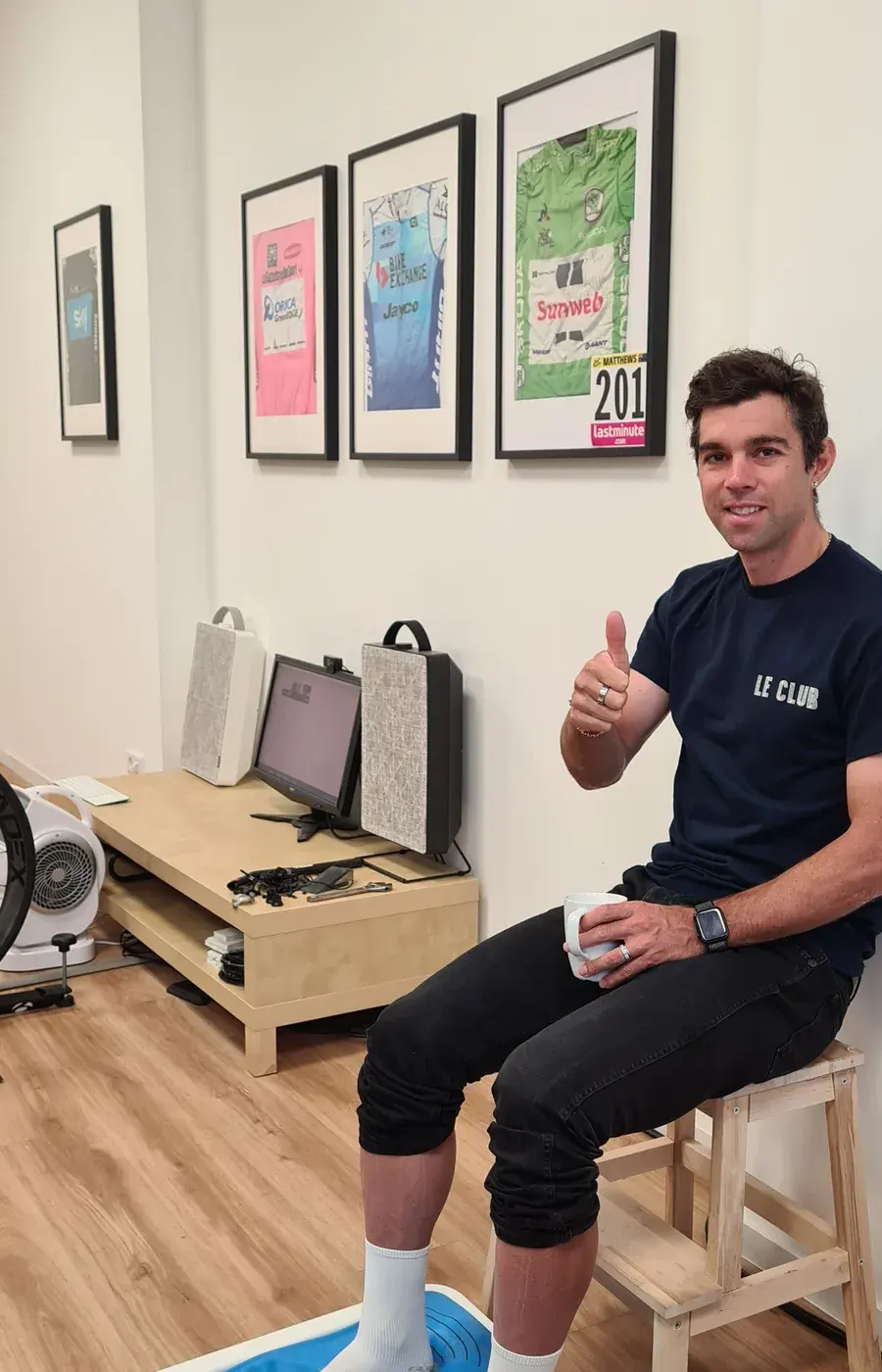
Achilles irritation rarely comes from one adjustment alone. The important question is how ankle movement, foot support and pedal loading interact through the full position. That is why a small cleat move can shift the symptom without solving the real cause.
- cleat position sits too far forward and lengthens the lever for the calf
- foot support is too unstable under load, so the foot rolls inside the shoe
- saddle height is too high and increases strain through the lower chain
- the pedalling pattern works too much from the ankle instead of the hip
- calf mobility is not enough for the current saddle height
- training load or cadence has risen quickly and recently
Two typical patterns: hard efforts and long steady load
Some riders feel the tendon mainly on hard efforts, out of the saddle or climbing — when a lot of force runs through the calf at once. Others feel it creep in on long, steady rides, as the same mild overload accumulates over hours.
Both patterns point the same way but need a different emphasis in the fit. For the effort pattern I look first at cleat position and foot stability; for the endurance pattern I weigh saddle height, cadence and whether your mobility matches the position.
What you can check yourself before you book
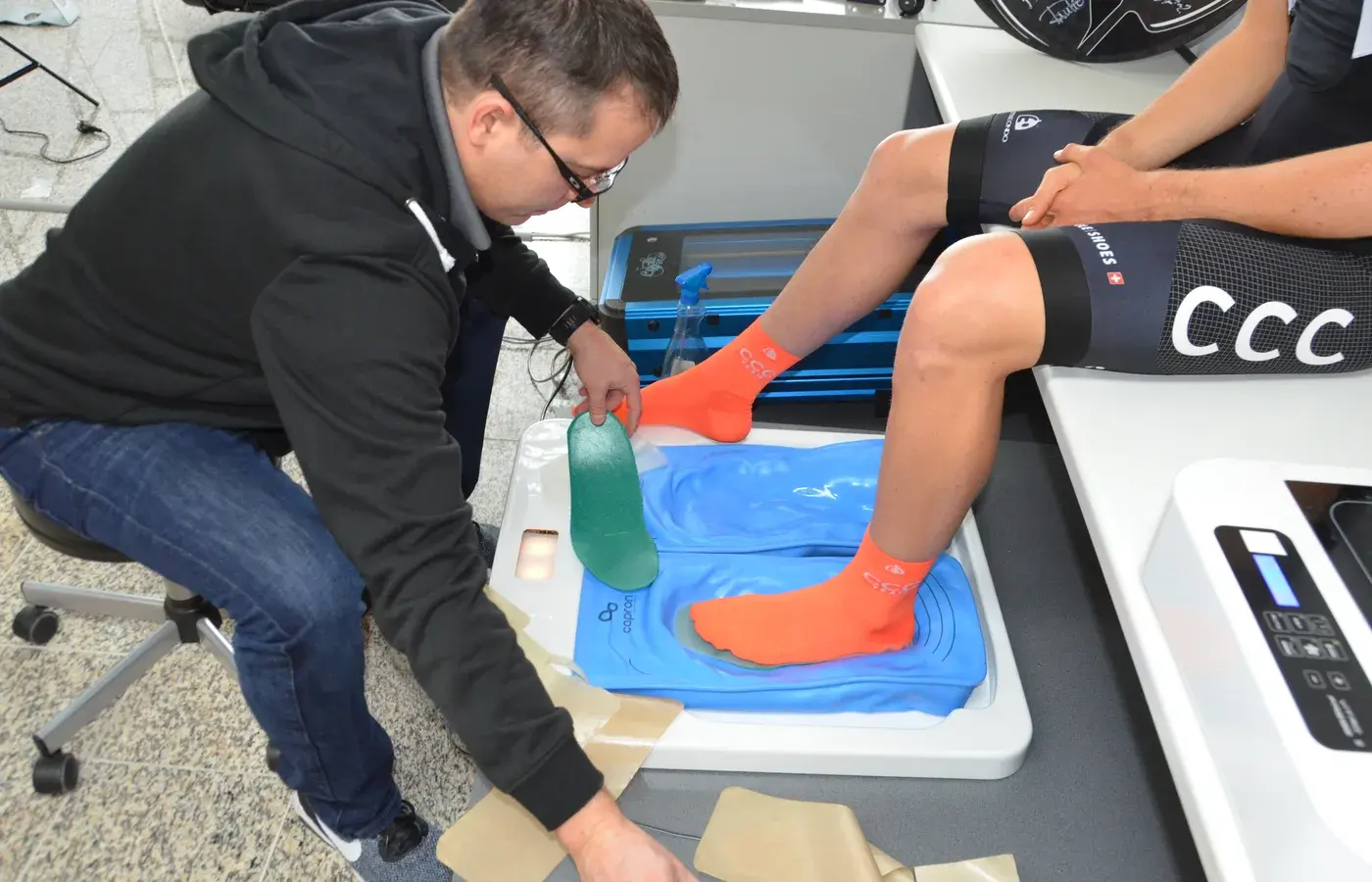
A few observations help me place the pattern faster. You do not need to fix any of this — just notice it on your next ride:
- Does the pain sit low at the heel attachment, or a little higher in the mid-tendon?
- Does it come on during hard efforts and out-of-saddle work, or only after long steady riding?
- Does your heel drop a long way at the bottom of the stroke, or do you keep the foot fairly quiet?
- Does the foot rock or roll inside the shoe when you push hard?
- Have saddle height, shoes, cleats or training volume changed recently?
None of this replaces an examination, but it often already shows whether the cleat-and-foot side or saddle height is the main story.
What I check and change during an Achilles pain bike fit
I start with movement and control off the bike, then analyse the position under load. I want to see which elements are increasing strain through the ankle and tendon rather than only reacting to the painful spot.
Typical levers are cleat position fore-and-aft (often a little further toward the heel to shorten the lever), firmer foot support so the foot does not roll under load, and saddle height where it is over-stretching the lower chain. I do not set any change in isolation — each one goes in alongside the rest of the position and is tested straight back under load.
The goal is a position that reduces unnecessary ankle strain while keeping the rest of the pedal stroke supported. You leave with clear target numbers, so the change still makes sense after the session.
When a bike fit helps and when medical assessment still matters
A bike fit is most useful when the bike or riding position is part of the load causing the symptom. It does not replace medical assessment for acute tendon pain, clear swelling, pain when walking, or symptoms not clearly linked to riding. If the tendon is already badly irritated, the sensible route is often both: have the load assessed medically or by a physiotherapist, and change the setup in parallel so riding does not keep re-creating the irritation.
The useful question is whether the setup is repeatedly asking too much from the ankle and calf every ride.